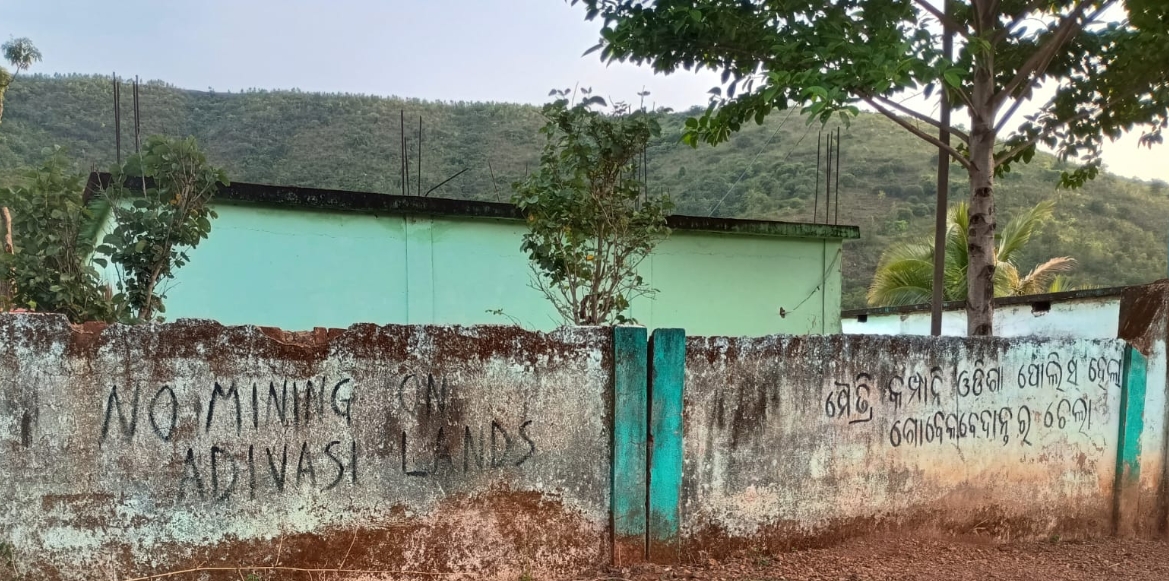
The continuing repression unleashed on Adivasi and Dalit communities resisting bauxite mining in the Sijimali region of South Odisha marks a dangerous escalation in the criminalisation of democratic dissent in the country. What is unfolding in the villages of Rayagada and Kalahandi districts is not a routine ‘law and order’ exercise, but a systematic assault on democratic rights, constitutional protections and the very survival of indigenous communities. The State is targeting people defending their lands, forests, water sources, livelihoods and collective existence against destructive mining projects being pushed in the interests of large mining corporate entities.
The Human Rights Forum (HRF) has learnt from concerned citizens across the State, as well as from extensive reporting on the issue over the past several months, that the Odisha government has responded to peaceful and democratic resistance in Talaampadar (Kalahandi district) and Kutamal(Sungerpanchayat, Rayagada district) with intimidation, police violence, surveillance, arbitrary arrests and fabricated criminal cases. Midnight raids on villages, the deployment of heavily armed police forces, tear-gas attacks on sleeping families, physical assaults on villagers and the incarceration of key movement functionaries expose the extent to which the State machinery has acted in defence of corporate mining interests while trampling upon constitutional safeguards meant to protect communities in the Scheduled Areas.
The people resisting mining in the Sijimali hills are not criminals. They are Adivasi and Dalit cultivators, forest dwellers, agricultural labourers, pastoralists, wage workers, women, youth and elders striving to defend their homes, livelihoods and habitats from irreversible destruction.It is clear that their resistance emerges from a deep historical, cultural, ecological and spiritual relationship with the hills and forests that sustain collective life in the region. These hills are not inert mineral deposits to be handed over to corporations; they are living landscapes integral to the identity, memory, culture and economic existence of the Kondh, Porajaand other indigenous communities inhabiting the region.
Also read:
https://humanrightsforum.org/bauxite-mining-will-poison-the-land-and-devastate-livelihood-of-adivasis/
The proposed Sijimali bauxite mining project spans the Kashipur and Thuamul Rampur blocks in the Rayagada and Kalahandi districts, covering more than 1,500 hectares of ecologically sensitive land, including nearly 700 acres of forest land explicitly protected under the Fifth Schedule of the Constitution and provisions of theScheduled Tribes and Other Traditional Forest Dwellers (Recognition of Forest Rights) Act, 2006 (FRA). Handed over to Vedanta Limited, the project threatens widespread ecological and social devastation. It endangers forests, streams, biodiversity, agricultural systems and the fragile hill ecology that sustains thousands of people across the region. At a time of deepening climate crisis, ecological collapse and growing water insecurity, the destruction of forests and mountain ecosystems in the name of extractive ‘development’ reflects a deeply destructive and irresponsible model of economic growth.
Yet, instead of upholding constitutional safeguards and respecting democratic processes of consultation and consent, the Odisha government has chosen the path of coercion, criminalisation and brute force.The events in Talaampadar village, at the foothills of Sijimali, on 10 March2026reveal the violent nature of this repression. Hundreds of police personnel reportedly entered the village before dawn, accompanied by private individuals said to be linked to mining company interests. Villagers recount that homes were forcibly entered, people dragged out of their houses, women assaulted, belongings destroyed and residents terrorised. Official documents, household items and personal possessions were damaged in the course of the raid. According to reports, 21 Dalits and Adivasis, including a pregnant woman and several minors, were arrested, while many others fled into nearby forests fearing further police violence.
Barely weeks later on the night of April 7, Kutamalvillage witnessed another deeply disturbing episode of violence unleashed by the police. According to testimonies of residents, police personnel accompanied by masked men entered the village in the dead of night, locked doors from the outside, hurled tear-gas shells into homes, assaulted villagers with lathis and forcibly dragged away residents. Children reportedly suffered breathing distress from tear-gas exposure, while women sustained injuries while trying to protect family members. Houses, vehicles and other property were damaged during the raid. The methods employed resembled punitive counter-insurgency operations directed against a hostile population rather than lawful policing in a constitutional democracy.
Equally alarming is the systematic misuse of criminal law to suppress dissent. Villagers and activists associated with the anti-mining resistance movement, led by the Maa Mati Mali Surakhya Mancha, have been charged with grave non-bailable offences including attempt to murder, rioting, unlawful assembly and dacoity. The indiscriminate use of such charges against ordinary villagers resisting dispossession demonstrates a deliberate attempt to portray democratic protest as criminal conspiracy. Repeated denial of bail in several cases has effectively transformed the judicial process itself into a mechanism of punishment and intimidation.The arrests of anti-mining activists such as Lingaraj Azad and Suresh Sangram further reveal the targeting of individuals associated with struggles against displacement and corporate extraction. Those who raise constitutional questions, document and expose violations, support affected communities or mobilise democratic resistance are increasingly being treated as enemies of the State.
HRF believes that the pattern unfolding in South Odisha is neither accidental nor isolated. Across mineral-rich regions of central and eastern India, constitutional protections for Adivasi communities are systematically eroded whenever they obstruct corporate access to natural resources. The Fifth Schedule, the Panchayats (Extension to Scheduled Areas) Act (PESA), and the Forest Rights Act are repeatedly diluted, manipulated or bypassed. Gram Sabha consent processes are reduced to hollow procedural formalities or are outright fabricated. Communities asserting legal and constitutionally guaranteed rights are routinely labelled ‘anti-development’ and subjected to sustained police repression.
This reflects a broader transformation in governance where the State increasingly acts in the service of extractive corporate interests. Forests, mountains, rivers and mineral-bearing lands are treated primarily as commercial assets to be opened up for corporate exploitation, while the communities inhabiting these areas are viewed as obstacles to be subdued or displaced. Democratic resistance is met not with dialogue, accountability or respect for constitutional rights, but with surveillance, criminalisation and violence.
The attempt by State agencies and vested mining interests to fracture communities through inducements, coercion, informant networks and the use of local intermediaries is especially alarming. Such methods deepen social divisions and corrode long-standing traditions of collective life, mutual trust and solidarity within indigenous communities. The overwhelming police presence in the region and the normalisation of armed intimidation, night raids and constant surveillance have created conditions of fear and insecurity in villages whose residents have committed no crime other than defending their lands, forests and livelihoods.
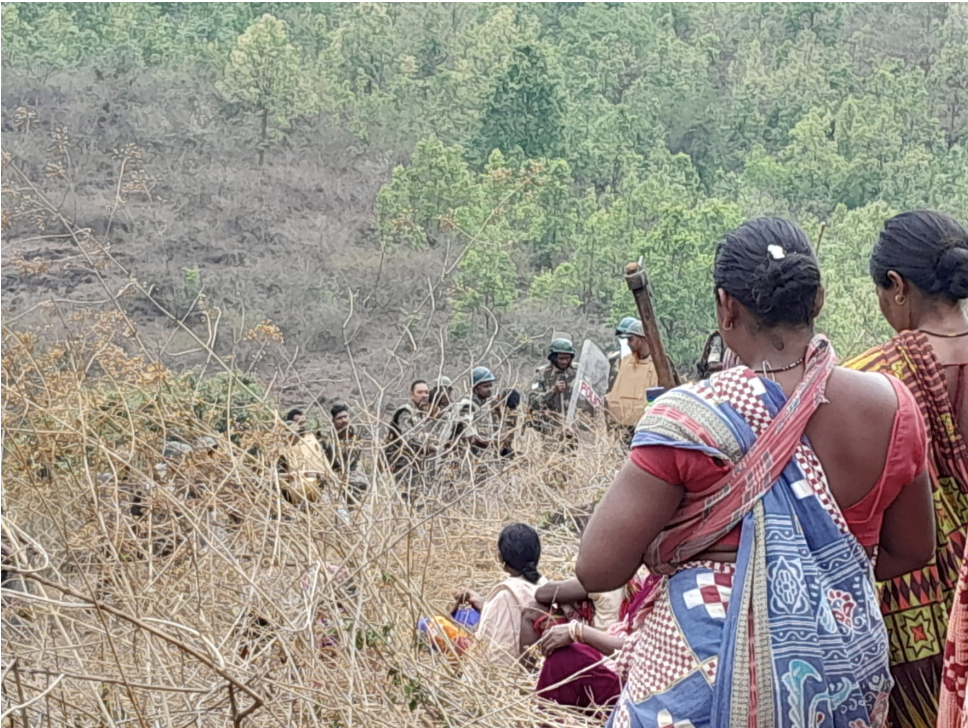
The people of South Odisha carry a living memory of earlier struggles against bauxite mining in the region and the repression that accompanied them. The Maikanchpolice firing of 16 December 2000, in which three Adivasis resisting bauxite mining in the Baphlimali hills were killed, remains a grim reminder of the violence unleashed in the name of ‘development.’ The present developments raise serious concerns that the State is once againwilling to sacrifice democratic rights, constitutional protections and human lifein defence of corporate mining interests.
HRF is of the view that the environmental consequences of mining in the Sijimali region will be severe and irreversible. Bauxite mining in fragile hill ecosystems destroys forests, contaminates water systems, disrupts agriculture, erodes biodiversityand leaves permanent ecological scars. For indigenous communities whose lives are intimately tied to forests and streams, such destruction is not merely environmental degradation. It is the obliteration of an entire way of life. The displacement, dispossession and impoverishment that follow mining projects are routinely obscured behind the rhetoric of ‘development’ and ‘economic growth.’
What is at stake in South Odisha extends far beyond a single mining project. It concerns the future of democratic rights in India, the integrity of constitutional protections, the survival of indigenous communities and the defence of ecological systems vital for collective survival.The struggle of the people of Sijimali is fundamentally democratic. They are asserting rights guaranteed under the Constitution and insisting that the laws enacted to protect Scheduled Areas and forest-dwelling communities be respected and meaningfully implemented. They are defending forests and water sources essential not only for their own survival but for broader ecological sustainability. To criminalise such resistance is, in effect, to criminalise democratic participation itself.
Also read:
https://humanrightsforum.org/bauxite-mining-apmdc-must-honour-pesa/
HRF demands the immediate release of all those arrested in connection with the anti-mining movement and the unconditional withdrawal of all fabricated criminal cases foisted upon villagers and movement activists. All coercive measures aimed at crushing peaceful democratic resistance must cease immediately and an independent judicial inquiry must be instituted into the police raids, assaults, destruction of property, arbitrary arrests and excessive use of force in the affected villages. The letter and spirit of the Fifth Schedule, PESA and the Forest Rights Act, including the principle of free, prior and informed consent of Gram Sabhas must be fully respected and implemented. HRF calls for an immediate halt to all mining and mining-related infrastructure activities in the Sijimali region until all legal, constitutional, environmental and democratic concerns are addressed in a transparent and genuinely democratic manner.
The ongoing struggle of the people of South Odisha is a struggle for land, livelihood, dignity, democracy, ecological survival and constitutional justice. Their resistance deserves recognition and solidarity, not criminalisation and repression. Protecting forests, hills, rivers and constitutional rights is not a crime. Criminalising those who defend them is.
Y Rajesh – HRF Andhra Pradesh State general secretary
VS Krishna – HRF AP & TG Coordination Committee member
13-5-2026
Visakhapatnam