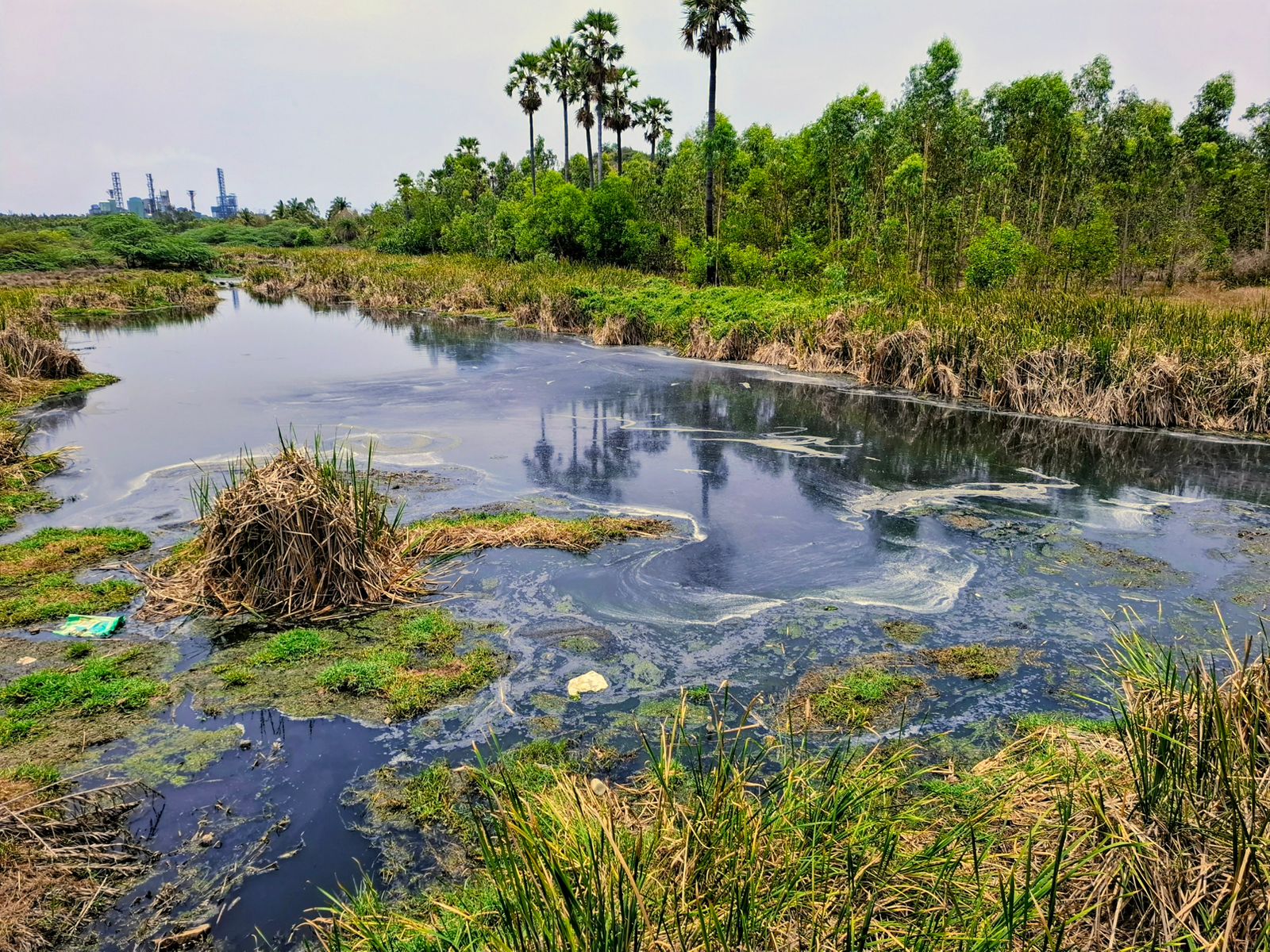
The Human Rights Forum (HRF) demands that the authorities immediately identify, close and seal all outlets, pipelines and discharge points responsible for the ongoing dumping of untreated or inadequately treated industrial toxic effluents into two streams – the Pillamma Gedda and Uppari Gedda – and inter-connected drainage channels in the Special Economic Zone (SEZ) region of Atchutapuram and Rambilli mandals in Anakapalli district.
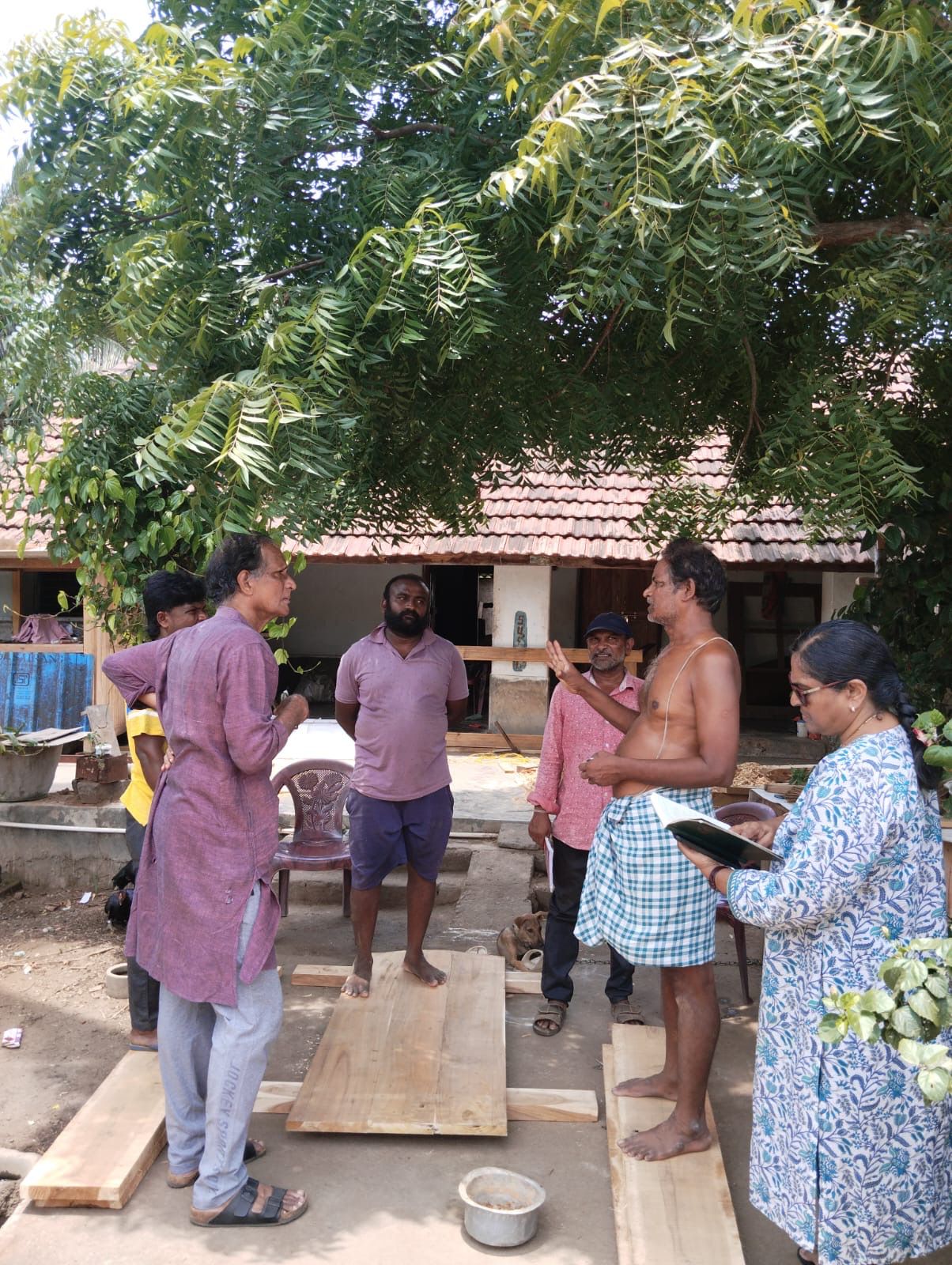
A four-member HRF team visited several affected villages in the two mandals on Friday following media reports and long-standing complaints regarding rampant industrial pollution in the region. The team visited the Pudimadaka area, the coastal fishers’ village in Atchutapuram mandal, and Seetapalem, Kamsali Colony, Lalam Koduru and Yerakannapalem, all in Rambilli mandal. We interacted with residents, predominantly farmers and fisher-folk. During our visit, we directly witnessed toxic industrial discharges flowing from dozens of pharma and chemical units into Pillamma Gedda and Uppari Gedda.
For years, residents of these villages have repeatedly complained to authorities concerned and political representatives across party lines about foul-smelling industrial discharges, consequent contamination of groundwater, destruction of aquatic life, damage to agriculture and livestock and the growing impact on public health. Despite repeated representations, no meaningful action has been taken beyond occasional token interventions that have done little to halt the continuing environmental destruction.
The unabated and open discharge of toxic effluents despite years of public complaints raises serious questions about the role of the Andhra Pradesh Pollution Control Board (APPCB) and other regulatory authorities. Such large-scale and prolonged violations could not have continued without either gross negligence, willful inaction, or active connivance on the part of the agencies responsible for enforcement.
Also read:
https://humanrightsforum.org/vizag-is-choking/
Residents recalled that not very long ago the waters of Pillamma Gedda and Uppari Gedda were clean enough to be used for drinking, domestic purposes and agriculture. With the rapid expansion of industries in the SEZ area and units outside the SEZ boundaries, these streams have effectively been transformed into fetid sewers carrying hazardous waste.
The ecological consequences are severe. Pillamma Gedda joins the larger Uppari Gedda near Yerakannapalem which then eventually merges with the Upputeru near Pudimadaka to the East before flowing into the sea. Toxic industrial effluents are therefore not confined to inland water bodies but are also entering fragile coastal and marine ecosystems. Residents of Pudimadaka, a vibrant fishing village, have repeatedly raised concerns about the impact on marine wealth and fisheries-based livelihoods, but their appeals have been ignored.
The Atchutapuram Effluent Treatment Plant (ETP), which is meant to process hazardous waste produced by these industries, is clearly failing in its basic function. Untreated or inadequately treated effluents continue to flow with alarming regularity into local streams, drainage channels and water bodies. We also heard reports that the ETP’s capacity is grossly inadequate to handle the enormous volume of hazardous waste generated in the area.
What is unfolding across the Atchutapuram-Rambilli industrial corridor is not merely a case of ‘pollution’ or a routine regulatory violation. It is the systematic poisoning of water bodies, agricultural lands, marine ecosystems and the lives and livelihoods of surrounding communities. The cumulative impact of this toxicity on water, soil, marine life and public health is truly staggering. Farmers, agricultural workers, artisan and occupational communities and fishers are being forced to bear the human and ecological costs of an industrial model that privatises profits while socialising environmental and public health destruction.
The industries responsible for these discharges, along with officials who have failed to act, cannot hide behind technicalities or bureaucratic evasions. Regulatory inaction in the face of continuing toxic discharge raises serious issues of accountability. The illegal release of hazardous industrial waste into streams, drainage channels and coastal ecosystems constitutes serious violations of the Water (Prevention and Control of Pollution) Act, 1974, the Environment (Protection) Act, 1986 and rules governing the handling of hazardous waste. Where contamination knowingly endangers human life, public health and ecological systems, criminal liability may arise not only for corporate managements but also for public officials who failed to intervene despite knowledge of ongoing violations.
HRF demands immediate steps to stop effluents from being discharged into the Pillamma Gedda and Uppari Gedda and other connected channels in the area. We call for a court-monitored or independently supervised scientific investigation into the industrial discharges in the SEZ region. A comprehensive health and environmental impact assessment covering all affected villages must be undertaken immediately. There should be time-bound criminal prosecution of industries responsible for illegal discharge of toxic effluents. An independent inquiry must be held into the role of APPCB officials and other regulatory authorities responsible for enforcement failures. Those found complicit in this environmental criminality must be prosecuted.
Also read:
https://humanrightsforum.org/air-pollution-in-vizag-helpless-residents-breathing-noxious-fumes/
HRF also calls for public disclosure of all effluent monitoring reports, groundwater studies, inspection records and compliance data relating to industries in the Atchutapuram and Rambilli mandals. Steps must be taken to restore and remedy damaged water bodies, agricultural lands and affected ecosystems. Affected communities, particularly farmers and fishers, whose livelihoods and health have suffered due to prolonged industrial contamination, must be suitably compensated.
The people of the affected villages in Atchutapuram and Rambilli mandals cannot be treated as expendable populations sacrificed in the name of industrial growth and the prevailing obsession with ‘ease and speed of doing business.’ Environmental protection and public health are not obstacles to development. They are fundamental constitutional and human rights obligations.
K Sudha – HRF AP State executive committee member
K Anuradha – HRF Visakhapatnam district general secretary
VS Krishna – HRF AP&TS Coordination committee member
17-5-2026,
Visakhapatnam.