To
The District Collector,
NTR District, Vijayawada
Andhra Pradesh – 520002
Sub: Demand to withdraw the illegal decision to appoint an Executive Magistrate to inquire into the custodial killing of Gade Sai Krishna- Reg.
Sir,
The Human Rights Forum (HRF) is a citizens’ forum established with the objective of working for the protection of the Constitutionally guaranteed/internationally recognised rights of the people. The right to a wholesome and dignified life is the touchstone for the rights that may be aspired for. In particular, HRF works for the rights of prisoners and people to be free from torture in the hands of the police. HRF is a self-financed organisation whose members for the most part are from the professions of teaching, journalism and the law.
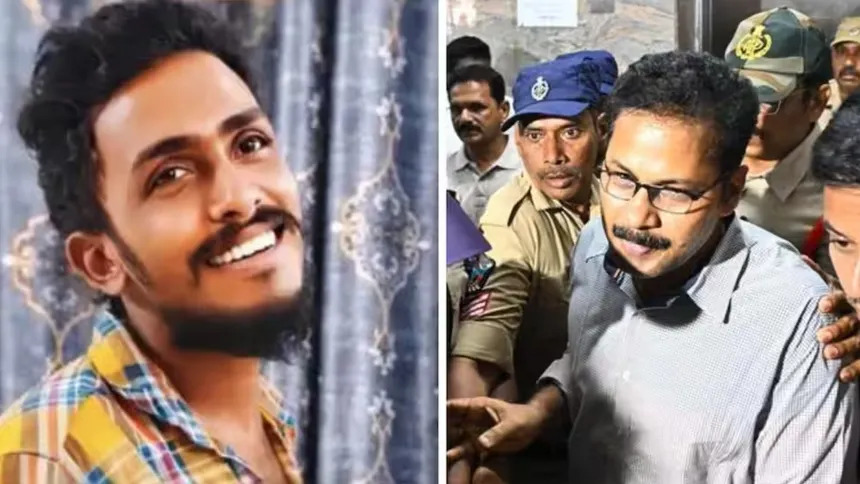
We have learnt that you have appointed the Revenue Divisional Officer (RDO) of Vijayawada Revenue Division by virtue of his position as an Executive Magistrate to inquire into the custodial killing of Gade Sai Krishna under Section. 196 of BNSS. We would like to bring it to your notice that this is blatantly illegal and contrary to the law of the land.
According to Section. 196(2) of BNSS, only a Judicial Magistrate can inquire into the cases of custodial killing. The corresponding section in Cr.P.C. was 176(1-A). The reason and spirit behind this are to have fair and impartial investigation into such horrendous acts. Sec. 196 of BNSS is extracted below for your ready reference.96. Inquiry by Magistrate into cause of death.
(1) When the case is of the nature referred to in clause (i) or clause (ii) of sub-section (3) of section 194, the nearest Magistrate empowered to hold inquests shall, and in any other case mentioned in sub-section (1) of section 194, any Magistrate so empowered may hold an inquiry into the cause of death either instead of, or in addition to, the investigation held by the police officer; and if he does so, he shall have all the powers in conducting it which he would have in holding an inquiry into an offence.
(2) Where, -(a) any person dies or disappears; or(b) rape is alleged to have been committed on any woman, while such person or woman is in the custody of the police or in any other acustody authorised by the Magistrate or the Court, under this Sanhita in addition to the inquiry or investigation held by the police, an inquiry shall be held by the Magistrate within whose local jurisdiction the offence has been committed.
(3) The Magistrate holding such an inquiry shall record the evidence taken by him in connection therewith in any manner hereinafter specified according to the circumstances of the case.
(4) Whenever such Magistrate considers it expedient to make an examination of the dead body of any person who has been already interred, in order to discover the cause of his death, the Magistrate may cause the body to be disinterred and examined.
(5) Where an inquiry is to be held under this section, the Magistrate shall, wherever practicable, inform the relatives of the deceased whose names and addresses are known, and shall allow them to remain present at the inquiry.
(6) The Magistrate or the Executive Magistrate or the police officer holding an inquiry or investigation under sub-section (2) shall, within twenty-four hours of the death of a person, forward the body with a view to its being examined to the nearest Civil Surgeon or other qualified medical person appointed in this behalf by the State Government, unless it is not possible to do so for reasons to be recorded in writing.
Explanation- In this section, the expression “relative” means parents, children, brothers, sisters and spouse.
As can be seen above, clause 2 states that in the case of a custodial death an inquiry must be conducted by the Magistrate who has jurisdiction over the place of offence.
Clause 6 states Magistrate or Executive Magistrate, which would mean that Magistrate by default is a Judicial Magistrate. Otherwise, there is no need to separate Executive Magistrate from Magistrate.
Similarly, according to Section. 3(1) of BNSS,
3. Construction of references.
(1) Unless the context otherwise requires, any reference in any law, to a Magistrate without any qualifying words, Magistrate of the first class or a Magistrate of the second class shall, in relation to any area, beconstrued as a reference to a Judicial Magistrate of the first class or Judicial Magistrate of the second class, as the case may be, exercising jurisdiction in such area.
As we have seen, the usage of Magistrate in Section. 196(2) is unqualified. By virtue of Section. 3(1), it would mean Judicial Magistrate and nothing else.
So, a conjoint and harmonious reading – a sine qua non for reading and interpreting any enactment- of Section. 3(1), 196(2), and 196(6) makes it abundantly clear that it is only Judicial Magistrate having jurisdiction over the place of offence that should inquire into custodial killings.
This is re-iterated by the Jharkhand High Court in Md. Mumtaz Ansari v/s State of Jharkhand, rendered on 14.05.2026,
“A plain reading of the above provision makes it axiomatic that the law mandates a specific procedural course. It creates a compulsory obligation that whenever the death or disappearance of an individual or a rape occurs in police custody, the inquiry must be conducted by a Judicial Magistrate or a Metropolitan Magistrate.”
The court further held that,
“The legislative use of the term “shall” in this context is an unequivocal command, signalling that the requirement is mandatory, non-discretionary, and admits of no executive substitution. By vesting this power exclusively in the Judicial Branch, the legislature has effectively declared that, in matters of custodial deaths, the factfinding process must be independent and insulated from the police department’s hierarchical structure. Therefore, enquiries by the Executive Branch in matters of custodial deaths can never be a substitute for enquiries by the Judicial Branch.”
The court went on to hold that,
“This statutory rule of construction makes it axiomatic that the legislature intended the “Magisterial Inquiry” under S. 196(2) to be a strictly judicial function. Consequently, the Executive, which is itself charged with the failure to prevent custodial death, is left with no prerogative to assign these duties to an Executive Magistrate, as such a move would be an unequivocal violation of the definitions set out by Parliament and of the legislative scheme.”
Similarly, the National Human Rights Commission (NHRC), in its proceedings dated 04.09.2020, held that,
“Inquiries shall also be held by Judicial Magistrate or the Metropolitan Magistrate in addition to the inquiries or investigations held by the police within the local jurisdiction where the offence has been committed. So the inquiry is the condition precedent to determine an offence and unless the inquiry is conducted by Judicial Magistrate or the Metropolitan Magistrate in cases where any person dies or disappears or rape is alleged to have been committed on any woman, while such person or woman in policeor judicial custody, there seems to be no scope to determine that such incident of custodial death, disappearance or rape as the case may be, is an offence”
It would also not be out of place to put here an excerpt from ‘Guidelines regarding various aspects of custodial deaths’ issued by the Ministry of Home Affairs, dated 13.07.2020, which states that,
“All State Governments/ UT Administrations are therefore, once again requested to sensitize and direct all functionaries at State, District and below level to follow and adhere to law of the land and the guidelines issued by NHRC on the subject matter.”
As we have seen above, the law of the land and the NHRC Guidelines unequivocally and unambiguously states that a Judicial Inquiry is must in the case of a custodial death. Substituting it with an Executive Inquiry is nothing but a mockery of the law of the land.
Furthermore, a Petition regarding Judicial Inquiry is already placed before the concerned Judicial Magistrate – in this case the Additional Judicial Magistrate of First Class, Vijayawada. A roadmap to the inquiry has already been submitted to the said Judicial Magistrate. Such being the situation, appointing an Executive Magistrate to inquire into the custodial death is nothing but usurping the role of the Judiciary and substituting it with the will and want of the Executive. Such an approach to rule of law cannot be countenanced under any circumstance.
Hence, we demand that the decision to appoint the Revenue Divisional Officer (RDO) of Vijayawada to inquire into the custodial death of Gade Sai Krishna be withdrawn immediately.
Y. Rajesh (HRF Andhra Pradesh State general secretary)
G. Rohith (HRF Andhra Pradesh State secretary)
02.07.2026,
Vijayawada